Why Your Survival Strategies Deserve More Credit Than They Get

What if the behaviours you criticise most about yourself aren’t flaws at all?
When people talk about resilience, it often brings to mind someone who never gives up, keeps smiling through hard times, and somehow manages to carry on regardless of what life throws at them. It’s an image that many of us admire, and can also leave us feeling as though we’re falling short. If you’ve ever found yourself thinking, I should be coping better, or Why can’t I just get over this?, you’re certainly not alone in having those thoughts. Many people judge themselves for the ways they respond to stress without recognising that those responses may have developed for very good reasons.
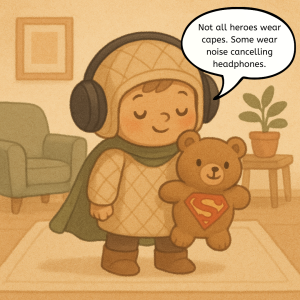
From a trauma-informed perspective, many of the behaviours we criticise in ourselves are actually survival strategies. They weren’t signs that something was wrong with us, they were intelligent adaptations that helped us get through difficult experiences. Understanding this can shift the conversation from self-criticism towards self-compassion and offers an alternative way of thinking about resilience. Rather than believing resilience means being strong all the time, it can be understood as our ability to gradually return to steadiness after stress, challenge, or emotional overwhelm.
What are survival strategies?
Survival strategies are the emotional, behavioural and physical ways we learn to protect ourselves when life feels unsafe, unpredictable or overwhelming. Two people can go through similar experiences and come away with very different survival strategies, reminding us that trauma-informed care must always make room for your individual story behind each response.
Sometimes these survival strategies develop during childhood. Sometimes they emerge after a traumatic event, ongoing stress, relationship difficulties, illness or burnout. Many happen without conscious awareness because our brain and nervous system are designed to keep us safe. These strategies are often remarkably effective. They help us navigate situations that may otherwise feel impossible to manage.
Over time, though, some of these patterns can continue long after the original circumstances have changed. What once helped us survive may begin to leave us feeling exhausted, disconnected or stuck. That doesn’t mean the strategy was wrong. It simply means it may no longer be the best fit for the life you’re living today.
The hidden strengths behind common survival strategies
It’s easy to look at our coping patterns through a lens of frustration.
“I wish I wasn’t such a perfectionist.”
“I care too much about what people think.”
“I avoid difficult conversations.”
Yet every one of these patterns often reflects an underlying strength.
For example:
- Perfectionism may have helped you avoid criticism or create a sense of predictability when life felt uncertain.
- People-pleasing may have helped preserve important relationships or reduce conflict.
- Being constantly busy may have provided distraction during emotionally difficult periods.
- Hypervigilance may have helped you notice potential risks before they became problems.
- Emotional withdrawal may have protected you when being vulnerable didn’t feel safe.
When viewed this way, these behaviours become easier to understand and rather than seeing them as personal flaws, we can recognise them as creative ways your mind and body tried to look after you.

Why self-compassion matters
Although many people believe healing begins by getting rid of unwanted behaviours, in reality, change often starts with understanding them. Imagine criticising someone for wearing a raincoat during a storm. The raincoat wasn’t the problem. It served a purpose while the weather was harsh. Survival strategies are much the same, and they deserve acknowledgement.
Approaching ourselves with curiosity instead of judgement helps reduce shame and creates space for new possibilities. Instead of asking, What’s wrong with me?, we might wonder, What was this helping me cope with? That small shift in perspective can feel surprisingly relieving.
Healing creates more choice
One of the goals of therapy isn’t to erase survival strategies, but to help people develop greater flexibility. Imagine someone whose instinct is always to keep everyone else happy. That pattern may have protected important relationships for many years, but as healing progresses they don’t suddenly become uncaring. Instead, they gain more choice. Sometimes they’ll still decide to prioritise someone else’s needs, and other times they’ll recognise that saying no is the healthier option. The same can be true for perfectionism, hypervigilance or emotional withdrawal. The coping strategy itself isn’t the enemy – the goal is having the freedom to choose how you respond, rather than feeling as though the response is automatic every time.
Small ways to strengthen resilience every day
Here are a few gentle practices that many people find helpful.
Notice what helps you feel safe
Your nervous system responds differently depending on what it experiences as safe or threatening. While you can’t always remove stress from your life, you can become more aware of the things that help your body settle. For some people, that might be spending time in nature. Others feel calmer after talking with a trusted friend, listening to music, cuddling a pet, or sitting quietly with a cup of tea. These moments won’t make life’s challenges disappear, but they can remind your nervous system that safety also exists alongside stress.
Allow yourself to pause
Many of us have learned to keep going, even when we’re exhausted. Taking a pause isn’t a sign of giving up – it’s often what allows us to continue in a way that’s more sustainable. Sometimes a pause is five slow breaths between meetings. Sometimes it’s taking your lunch break away from your desk. Sometimes it’s recognising that today isn’t the day to tackle every item on your to-do list. Rest is not the opposite of resilience, and in fact can be one of the ways resilience grows.
A Kinder Way to Understand Your Strength
Many of us carry around stories about who we should be. We tell ourselves we should cope better, worry less, need less, or recover more quickly and those expectations can be heavy. Looking at yourself through the lens of survival rather than failure offers something different – recognising that your mind and body have been working hard to protect you, often in ways you never consciously chose.
Resilience isn’t about never struggling but about discovering that you can find your way back to steadiness. Every time you respond to yourself with a little more compassion, you’re creating space for something new.
If you’re beginning to recognise survival strategies in your own life and would like support exploring them, working with a trauma-informed therapist can provide a safe and compassionate space to understand these patterns without judgement.
At Mindful Living, we work alongside people to build emotional resilience, support nervous system regulation and help create lasting change at a pace that feels right for them.
Some helpful links: